Why guest transport earns its budget line
A shuttle solves four problems simultaneously: guests who do not know the area cannot get lost, parking constraints stop mattering, your ceremony starts on time because everyone arrives together, and nobody drives home after the champagne toast.
For a 150-guest wedding the whole programme typically costs $1,200 to $2,400 — comparable to a floral upgrade, and the thing guests will actually thank you for.
Sizing: work from ridership, not headcount
Assume about 70% of invited guests use the shuttle when it is offered and communicated well. For 150 guests that is roughly 105 riders.
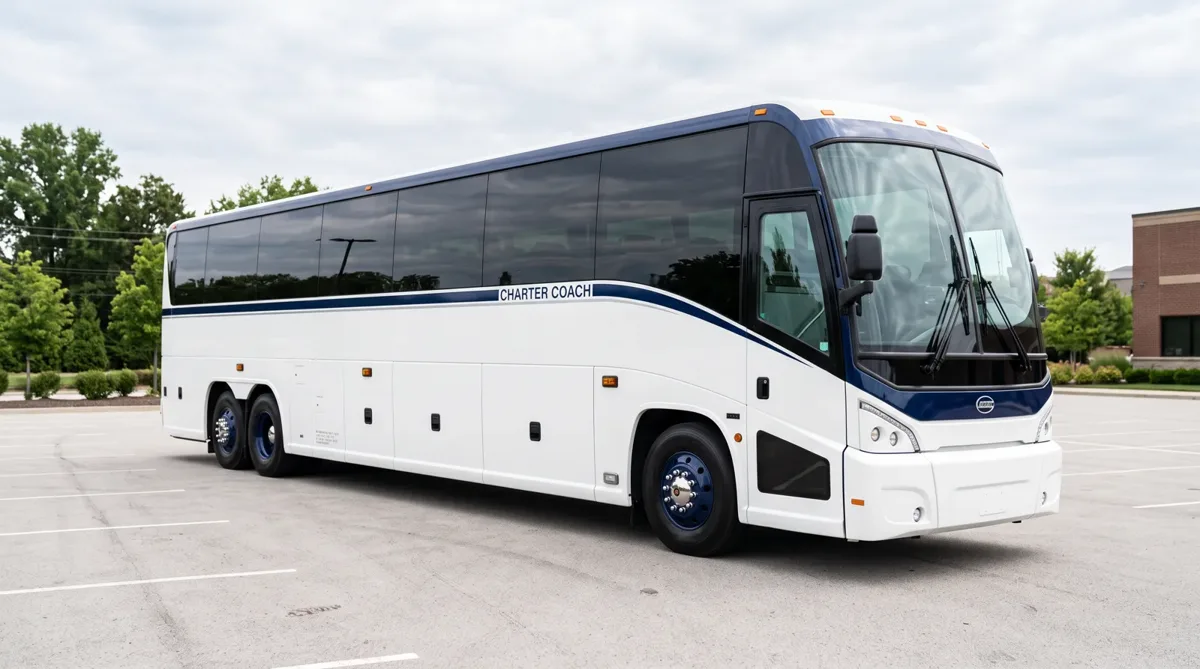
Then work out cycle time — drive to the venue, unload, drive back, load — and decide whether one vehicle running twice is acceptable or you need two in parallel. A 15-minute each-way trip means a 40-minute cycle, so one 56-passenger coach comfortably covers 105 riders in two runs across 80 minutes. A 40-minute each-way trip does not; you need two vehicles.
- Under 60 riders: one mini bus, two runs, or one coach in a single run
- 60–110 riders: one full-size coach running twice, or two mini buses in parallel
- 110–200 riders: two coaches, or one coach plus two mini buses for multiple hotels
- Over 200 riders: multi-vehicle staggered schedule — bring the operator into planning early
Building the schedule
Work backwards from the ceremony. First departure 90 minutes before the ceremony, second departure 60 minutes before, final departure 40 minutes before — then nothing until the reception winds down.
For returns, run continuously across the last 90 minutes: a departure when the reception officially ends, another 30 minutes later, and a final one 30 minutes after that. Guests self-sort into early leavers and closers, and nobody feels rushed.
The venue details that decide your vehicle
Before you book, send your operator photos of the venue approach and ask the venue three questions: what is the overhead clearance on the drive, can a 45-foot vehicle turn around on site, and is there a designated bus loading area?
Historic estates, vineyards and private clubs frequently cannot accommodate a full-size coach. Finding that out in planning means booking two mini buses; finding out on the wedding day means guests walking a quarter mile in formal shoes.
Communication is half the job
The best-planned shuttle fails if guests do not know it exists. Put times on the wedding website, print them on a card in welcome bags, post a sign at the hotel front desk, and have the hotel concierge briefed.
Designate one person — a planner, a groomsman, anyone but the couple — as the shuttle contact, and give the driver their mobile number. Then, on the day, the couple never hears about transportation at all, which is the entire point.
- Book 6–9 months ahead for a peak-season Saturday; 3 months off-peak
- Confirm the alcohol policy in writing before you promise guests anything
- Schedule the final return 30 minutes after the official end time
- Budget 15–20% gratuity for the driver, or confirm it is already included
- Reconfirm the itinerary with dispatch 48 hours out
Put this into practice
The fastest way to test any number in this article is to get real quotes for your actual trip. It takes about 90 seconds, costs nothing, and up to five vetted operators reply with competing prices.
Get my free quotes